
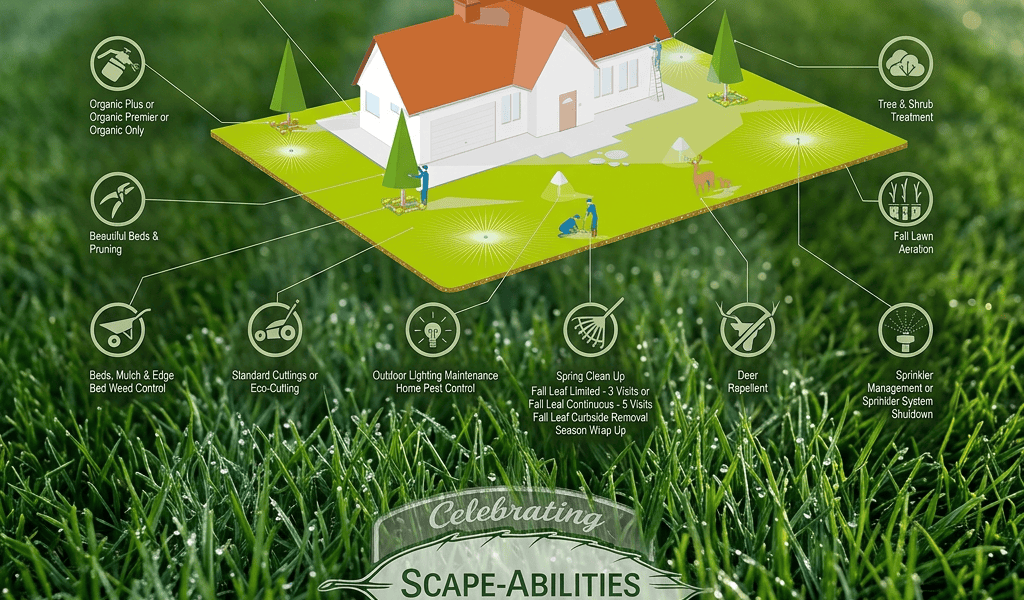
What to Look for in Quality Lawn Care Maintenance: Your Guide to Choosing Professional Lawn Care Services
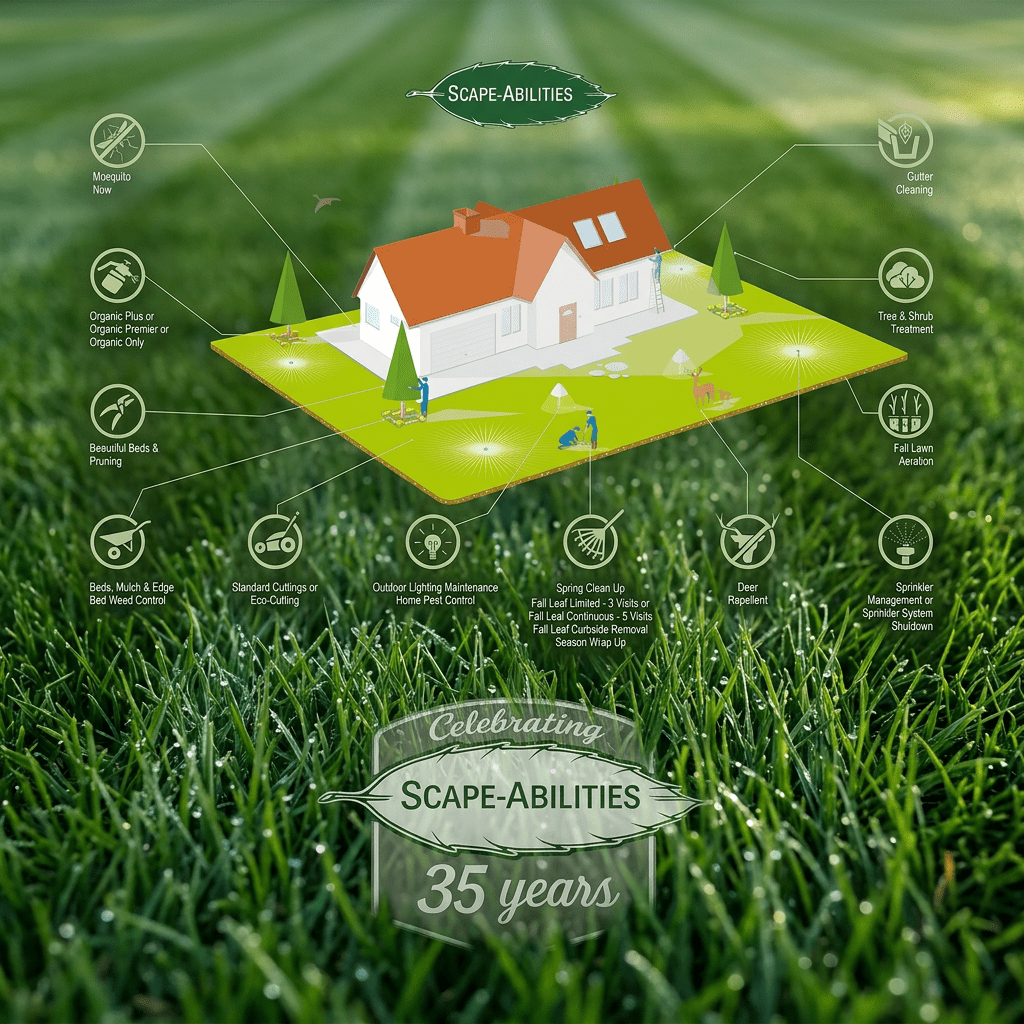
Key Takeaways
- Verify certifications and licenses, including an NJ Department of Environmental Protection pesticide license and licensed irrigation contractor status.
- Look for membership in professional organizations such as APLD or NALP, which signal a commitment to industry standards.
- Prioritize companies with proven local experience in regional soil, climate, and pest conditions.
- Expect customized, seasonally-driven strategies rather than a one-size-fits-all program.
- Ask about sustainable and organic practices that reduce water waste and chemical runoff.
- Confirm transparent pricing, clear contracts, and responsive customer communication.
- Check that the provider actually services your specific local area.
To choose quality lawn care maintenance services, look for the following in a lawn care provider:
-
Certifications and Licenses: Ensure the company has relevant certifications, such as a pesticide license from the NJ Department of Environmental Protection, and is a licensed irrigation contractor.
-
Professional Affiliations: Membership in professional organizations like the Association of Professional Landscape Designers (APLD) or the National Association of Landscape Professionals (NALP) indicates a commitment to industry standards.
-
Experience and Expertise: A qualified team, including landscape architects, designers, and horticulturalists, suggests a well-rounded approach to lawn care.
-
Sustainable Practices: Inquire about their use of sustainable lawn care practices that minimize water waste and chemical runoff.
-
Seasonal Strategies: Look for a company that employs diverse strategies tailored to seasonal challenges, such as aeration in spring and fall, and deep watering in summer.
-
Customer Service: Good communication and responsiveness, including easy access to contact information, are essential for a positive experience.
-
Service Areas: Confirm that they serve your local area, as some companies may have specific regions they cover.
Certifications and Licenses: Ensure the company has relevant certifications, such as a pesticide license from the NJ Department of Environmental Protection, and is a licensed irrigation contractor.
Professional Affiliations: Membership in professional organizations like the Association of Professional Landscape Designers (APLD) or the National Association of Landscape Professionals (NALP) indicates a commitment to industry standards.
Experience and Expertise: A qualified team, including landscape architects, designers, and horticulturalists, suggests a well-rounded approach to lawn care.
Sustainable Practices: Inquire about their use of sustainable lawn care practices that minimize water waste and chemical runoff.
Seasonal Strategies: Look for a company that employs diverse strategies tailored to seasonal challenges, such as aeration in spring and fall, and deep watering in summer.
Customer Service: Good communication and responsiveness, including easy access to contact information, are essential for a positive experience.
Service Areas: Confirm that they serve your local area, as some companies may have specific regions they cover.
These factors can help ensure you select a professional lawn care service that meets your needs effectively.
Research further supports the value of professional services, often demonstrating superior results compared to other lawn care approaches.
Professional Lawn Care: Quality, Cost, and Pest Control Comparison We evaluated aesthetic (lawn quality), biological (weeds and insect pests), and economic (management costs) effectiveness of a commercial (managed by a professional company), consumer, integrated pest management (IPM), organic, and an untreated lawn care program. The commercial program had the highest lawn quality, and weed and insect control, and was the most expensive. The IPM and organic programs were cheaper than the commercial program and produced slightly lower lawn quality. Although the consumer program was the cheapest, it produced the lowest weed control and lawn quality among treated lawns.
Comparative evaluation of aesthetic, biological, and economic effectiveness of different lawn management programs, DS Richmond, 2009
How Does Experience and Local Expertise Impact Lawn Care Quality?
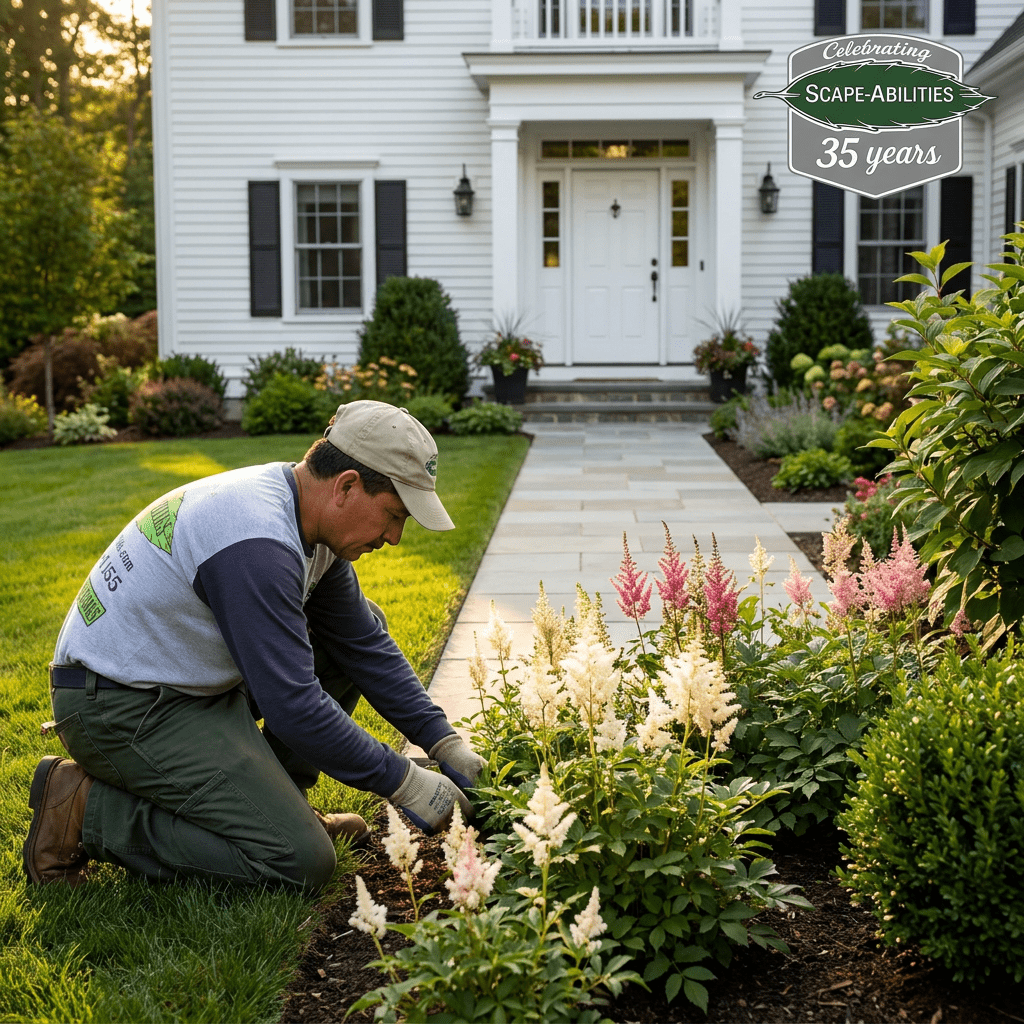
Choosing a lawn care company with proven local experience is important because they understand the specific environmental conditions, seasonal challenges, and pest issues that affect lawns in your area. Their familiarity with local soil types, climate, and plant species allows them to implement effective, tailored strategies for maintaining lawn health and appearance. Additionally, experienced local companies are likely to have established relationships with suppliers and a reputation within the community, ensuring reliable service and support.
Why Choose a Lawn Care Company with Proven Local Experience?
Local expertise is crucial for effective lawn care. Companies familiar with the regional climate can better anticipate seasonal challenges, such as droughts or heavy rainfall, and adjust their strategies accordingly. This knowledge leads to healthier lawns that thrive in their specific environments. Furthermore, local companies often have established relationships with local suppliers, ensuring access to the best materials and resources for lawn care.
What Certifications and Licenses Ensure Professional Lawn Care?
-
Association of Professional Landscape Designers (APLD)
-
NJ Department of Environmental Protection pesticide license
-
Licensed Irrigation Contractor
-
Certified Home Improvement Contractor
-
Accreditation with Rutgers continuing education for landscape professionals
What Are the Key Components of Comprehensive Lawn Care Services?
-
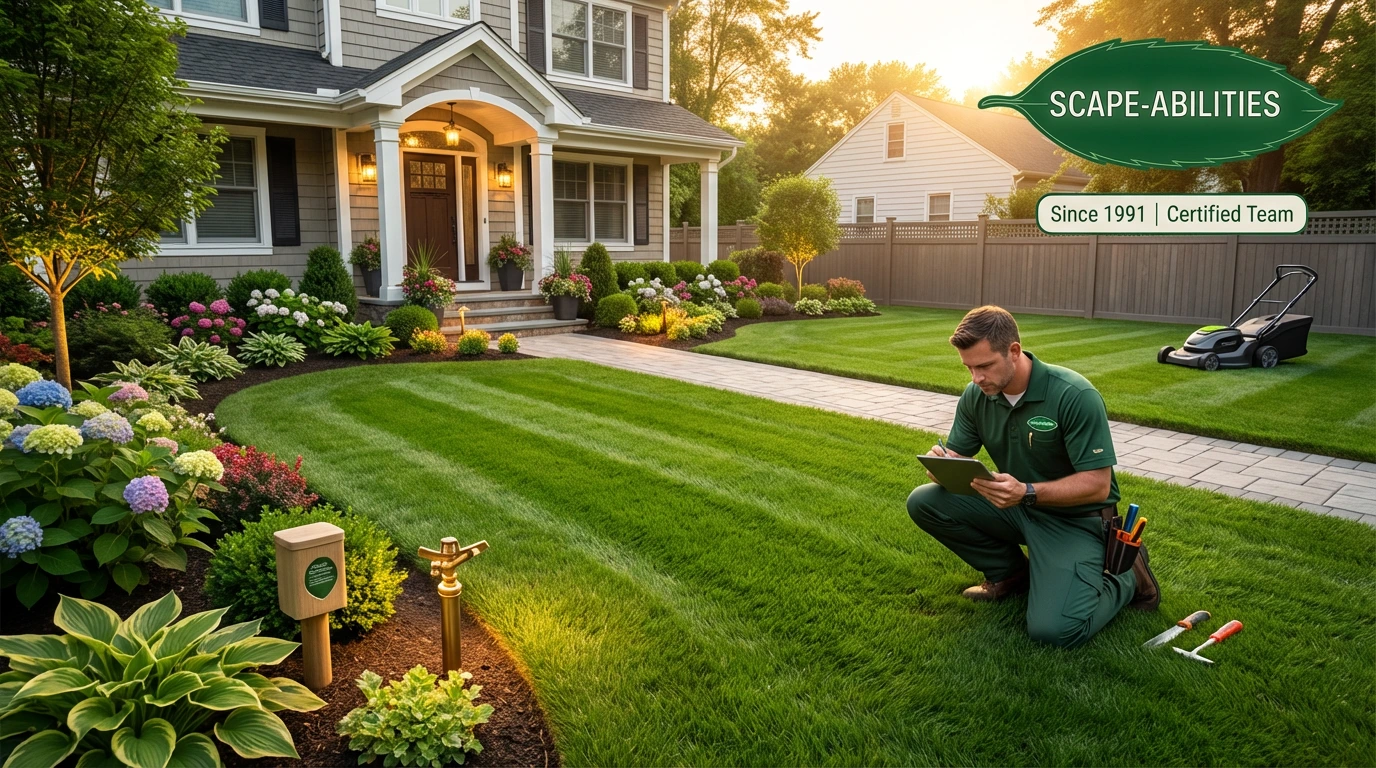
Watering: Deep but infrequent watering schedules, preferably in the early morning, to reduce evaporation and promote deep root systems.
-
Herbicides and Fertilizers: Application of pre-emergent herbicides and fertilizers only when necessary, following soil test recommendations to avoid over-application.
-
Mechanical Methods: Use of aeration, dethatching, and overseeding to strengthen soil and turf naturally.
-
Organic Matter Recycling: Leaving finely chopped leaves on the lawn to serve as natural mulch and nutrient sources.
-
Grass Varieties: Choosing grass varieties suited to the local climate to reduce inputs needed.
-
Environmental Considerations: Opting for environmentally safer ice melt and winter products.
Integrating these tactics within a seasonal care framework supports a resilient lawn and broader environmental health.
Beyond just the lawn, a comprehensive approach to property aesthetics often includes the care of surrounding elements. For expert guidance on maintaining your trees, shrubs, and flower beds, consider specialized services that enhance your entire landscape.
How Do Customized Lawn Care Programs Meet Your Lawn’s Needs?
Customized lawn care programs meet your lawn’s needs by integrating diverse strategies that address seasonal vulnerabilities and environmental stressors. These programs utilize techniques such as deep but infrequent watering, timely application of fertilizers and herbicides based on soil tests, mechanical methods like aeration and overseeding, and the use of grass varieties suited to the local climate. This holistic approach not only promotes a resilient lawn but also supports broader environmental health by minimizing chemical use and conserving resources.
What Preventative Maintenance Practices Promote Lawn Health?
-
Deep but infrequent watering schedules, preferably in the early morning, to reduce evaporation and encourage deep root systems.
-
Applying pre-emergent herbicides and fertilizers only when necessary, following soil test recommendations to avoid over-application.
-
Employing mechanical methods such as aeration, dethatching, and overseeding to strengthen soil and turf naturally.
-
Leaving finely chopped leaves on the lawn to serve as natural mulch and nutrient sources.
-
Opting for grass varieties suited to the local climate to reduce inputs needed.
Integrating these practices within a seasonal care framework helps create a resilient lawn that supports environmental health.
How Can Transparent Pricing and Customer Service Build Trust?
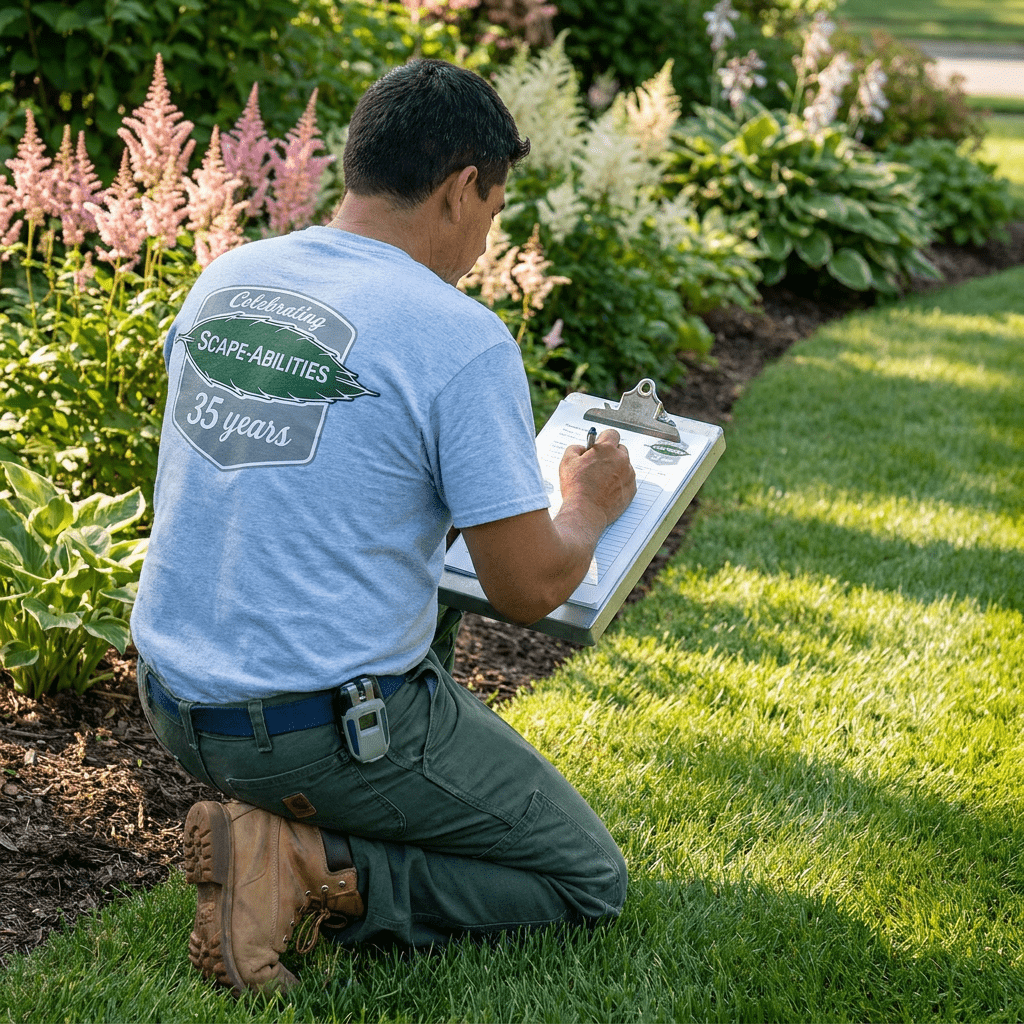
Transparent pricing and excellent customer service are essential for building trust in lawn care services. Clear communication about pricing structures and service expectations helps clients feel secure in their investment. Additionally, responsive customer service ensures that any concerns or questions are addressed promptly, fostering a positive relationship between the service provider and the client.
What Should You Expect from Clear Lawn Care Pricing and Contracts?
When engaging with a lawn care service, you should expect clear and detailed pricing structures that outline all costs associated with the services provided. Contracts should specify the scope of work, payment terms, and any potential additional charges. This transparency helps avoid misunderstandings and ensures that clients are fully informed about their financial commitments.
How Does Responsive Communication Enhance Lawn Care Satisfaction?
Responsive communication enhances lawn care satisfaction by ensuring that clients feel heard and valued. Quick responses to inquiries and proactive updates about service schedules or changes can significantly improve the customer experience. This level of engagement not only builds trust but also encourages long-term relationships between clients and lawn care providers.
Why Are Eco-Friendly and Organic Lawn Care Options Important?

Eco-friendly and organic lawn care options are important because they help minimize water waste, reduce chemical runoff, and protect ecosystems. These practices promote a healthy lawn while being environmentally responsible, addressing the growing concern among homeowners to nurture their lawns sustainably.
Studies have explored the effectiveness of various lawn management plans, including pesticide, organic, and nitrogen-based strategies, to assess their impact on lawn quality.
Lawn Management: Pesticide, Organic, and Nitrogen Strategies for Quality
Pesticide and fertilizer usage throughout the United States is coming under increased scrutiny from both the public and scientific communities due to potential negative environmental impacts and perceived health concerns. The three studies presented here focus on evaluating different management plans for home lawns and athletic fields, while also providing improved dissemination of information to athletic field managers. Results of the athletic field and home lawn management plan study indicate that pesticide treatments outperformed non-pesticide treatments across most measures. However, if a non-pesticide plan is desired then the high input organic or high input pesticide-free plan would be preferred over the low input organic or low input pesticide-free plan. Results for the fertility study indicate that a fertilization rate of as low as 5 g N m-2 provided statistically equivalent results across some color/quality measures, though exact rate would be highly dependent on No-pesticide, conventional, and nitrogen management strategies for lawns and athletic fields in Southern New England, J Campbell, 2017
What Are the Benefits of Organic Lawn Treatment Programs?
-
Environmental Health: They reduce chemical runoff and pollution, promoting a healthier ecosystem.
-
Soil Strengthening: Techniques like aeration, dethatching, and overseeding naturally enhance soil and turf health.
-
Drought Resistance: Deep but infrequent watering encourages deep root systems, improving drought resilience.
-
Nutrient Recycling: Leaving finely chopped leaves on the lawn serves as natural mulch and nutrient sources.
-
Customized Care: Using grass varieties suited to the local climate reduces the need for additional inputs.
-
Support for Beneficial Organisms: Following soil test recommendations prevents over-application of fertilizers and herbicides, protecting beneficial organisms.
These practices create a resilient lawn while supporting broader environmental health.
How Does Smart Irrigation Support Sustainable Lawn Maintenance?
Smart irrigation supports sustainable lawn maintenance by promoting deep but infrequent watering schedules, preferably in the early morning. This approach reduces evaporation, encourages deep root systems, and improves drought resistance. Additionally, it helps minimize water waste and chemical runoff, aligning with environmentally responsible practices. Integrating smart irrigation with other sustainable tactics, such as using appropriate grass varieties and mechanical methods for soil health, creates a resilient lawn that benefits both the environment and lawn health.
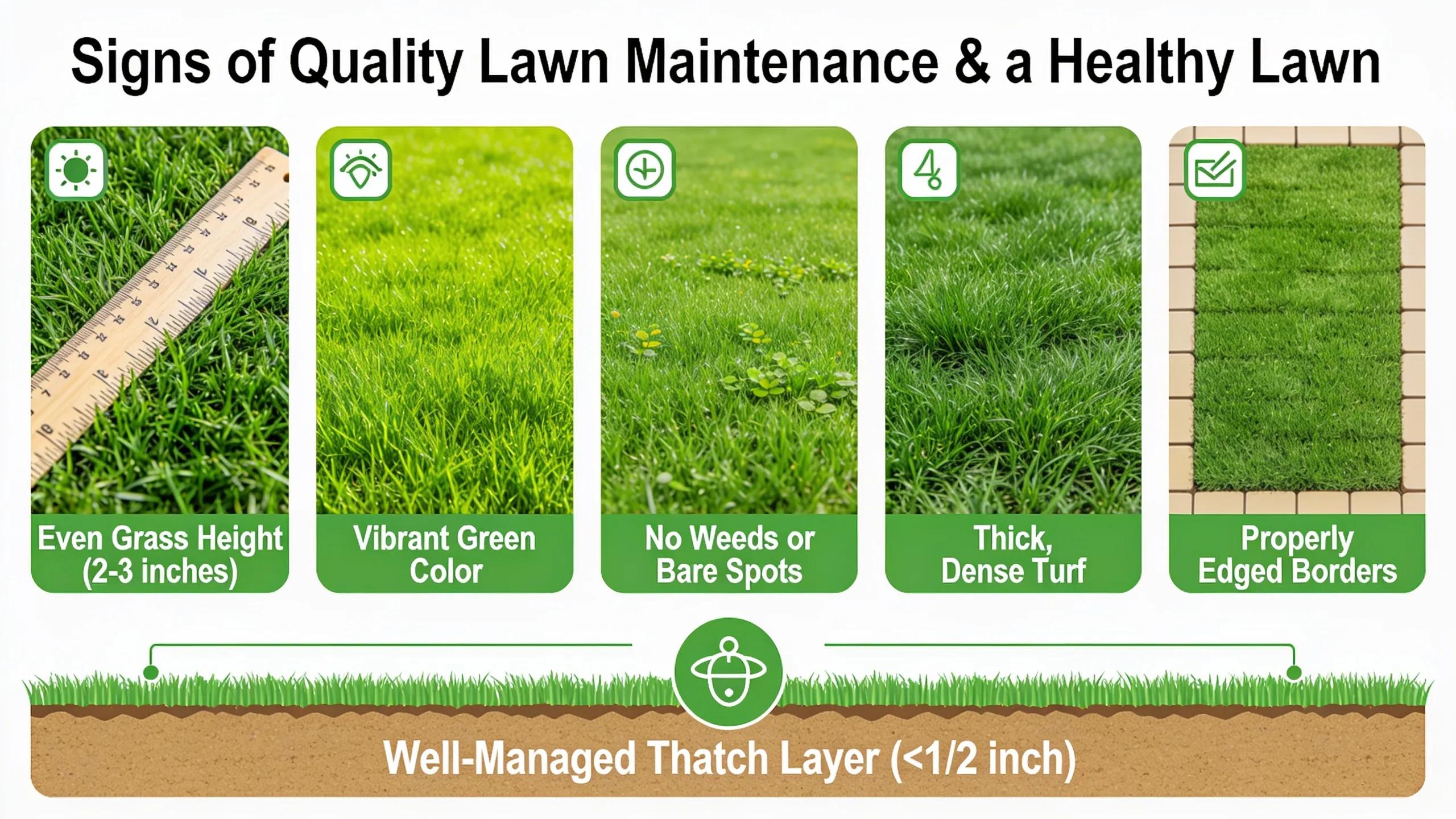
What Signs Indicate Quality Lawn Maintenance and a Healthy Lawn?
-
Lush Appearance: A thick, green lawn without bare patches.
-
Proper Watering: Deep but infrequent watering schedules, preferably in the early morning.
-
Aeration and Overseeding: Regular aeration and overseeding to repair compacted or thin areas.
-
Pest Management: Regular scouting and prompt treatment of pests to prevent damage.
-
Cleanliness: Removal of debris and fallen leaves to reduce disease risk.
-
Seasonal Care: Adjustments in care practices based on seasonal vulnerabilities, such as limiting foot traffic during hot weather.
-
Sustainable Practices: Use of environmentally friendly methods, such as leaving finely chopped leaves as mulch and applying fertilizers only when necessary.
These practices contribute to a resilient and healthy lawn.
How to Identify Indicators of a Well-Maintained Lawn?
To identify indicators of a well-maintained lawn, look for a lush, green appearance without bare patches. Regular watering schedules and the absence of weeds are also signs of effective lawn care. Additionally, a lawn that is regularly aerated and overseeded will show improved density and health.
What Role Do Regular Lawn Assessments Play in Quality Care?
Regular lawn assessments play a crucial role in quality care by allowing homeowners to identify and address stressors that can degrade lawn quality, such as high temperatures, physical wear, and pest invasions. These assessments enable strategic management aligned with seasonal vulnerabilities, helping to maintain lawn strength and appearance. By regularly scouting for pests and monitoring lawn conditions, homeowners can implement diverse strategies to combat stress, promote recovery, and reinforce lawn resilience holistically.
Frequently Asked Questions
What certifications should I look for in a lawn care company?
Look for a company holding a pesticide license from the NJ Department of Environmental Protection, licensed irrigation contractor status, and membership in professional organizations such as the Association of Professional Landscape Designers (APLD) or the National Association of Landscape Professionals (NALP). These credentials indicate a commitment to industry standards and ongoing professional development.
How often should a lawn be watered for the best results?
Most healthy lawns benefit from deep but infrequent watering, ideally done in the early morning to reduce evaporation and encourage deep root growth. This approach improves drought resistance and supports long-term lawn health better than frequent, shallow watering.
What are the clearest signs of quality lawn maintenance?
A well-maintained lawn typically shows a lush, thick, green appearance without bare patches, minimal weed presence, regular aeration and overseeding, and prompt pest management. Consistent cleanliness, such as removal of debris and fallen leaves, is another reliable indicator of quality care.
Are organic or eco-friendly lawn care programs as effective as conventional ones?
Organic and integrated pest management (IPM) programs can produce results close to commercial programs, often at a lower cost, though research shows fully commercial programs still tend to achieve the highest lawn quality and weed control. Many homeowners choose organic or IPM approaches as a balance between environmental responsibility and effective results.
Does Scape-Abilities provide lawn care services throughout New Jersey?
Scape-Abilities Lawn Services provides residential and commercial lawn care, landscape design, and property maintenance throughout Northern Central New Jersey, based out of Scotch Plains, NJ.
Conclusion
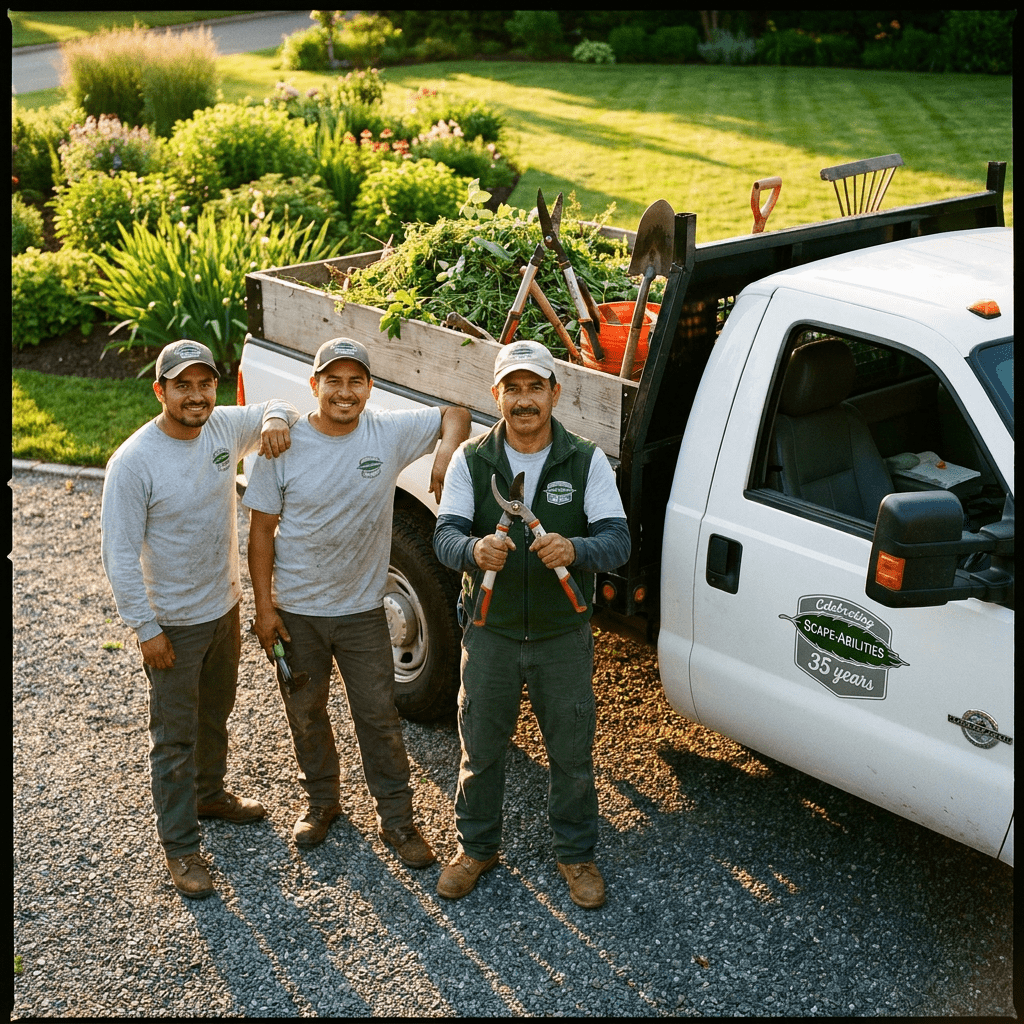
Choosing a quality lawn care provider comes down to verifying the right credentials, confirming a track record of local expertise, and looking for evidence of tailored, seasonally-driven strategies rather than a one-size-fits-all approach. Companies that combine proper certifications, sustainable practices, transparent pricing, and responsive communication are best positioned to deliver a healthy, resilient lawn year-round. By keeping these factors in mind, homeowners can confidently select a lawn care partner who protects both the appearance of their property and the surrounding environment.
Ready for a Healthier, Better-Maintained Lawn?
If your lawn could benefit from certified, locally experienced care, Scape-Abilities Lawn Services is ready to help. Explore our professional lawn care programs or reach out directly at +1-908-654-1155 or info@scape-abilities.com to schedule an assessment of your property.