
What Thursday Morning Looks Like at Scape-Abilities (And Why It Matters For Your Property)
Most landscape companies think of training as onboarding. Someone new joins the crew, they get shown how to run a mower, and they’re on routes by the following week.
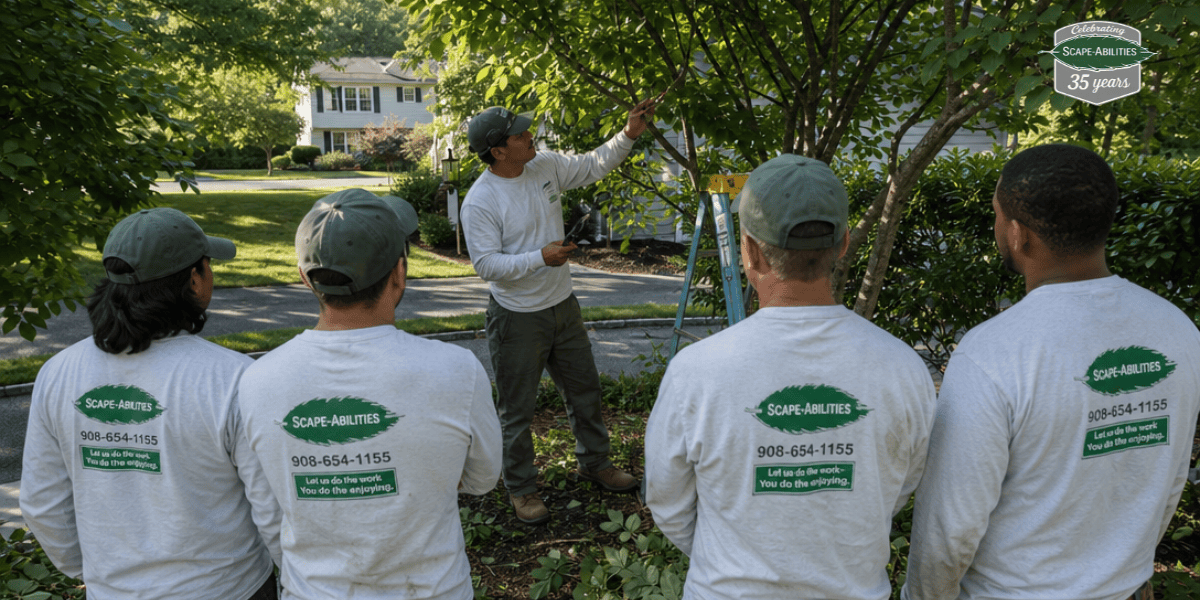
Scape-Abilities operates differently. Every Thursday morning, before the crews leave for their routes, they meet. Sometimes at the yard for a tailgate discussion. Sometimes at a specific client property for a field session. The topic changes weekly. What doesn’t change is the practice.
What actually happens on Thursday mornings
The Thursday tailgate isn’t a five-minute pep talk. It’s a working discussion. Topics rotate week to week:
- Grass cutting technique on different turf species (tall fescue, Kentucky bluegrass, perennial rye all cut differently).
- Pruning methods for specific shrubs, and the bloom timing that dictates when each species can be safely cut.
- What’s currently happening in the lawn treatment cycle, and what crews should be watching for on properties this week.
- Weed identification, especially the invasive vines that spread across bed lines if they’re not caught early.
- Equipment safety protocols, including hands-free driving standards and the specific movement patterns crews use in the yard where multiple trucks are loading and unloading simultaneously.
Some Thursdays the meeting stays at the yard. Other Thursdays the crews meet at a specific client property.
“We have Thursday morning tailgate meetings. It could be grass cutting techniques, pruning techniques, what’s happening with lawn treatments and what to look out for. Then in the field, we have sessions where we’ll pick one customer property and different crews meet us out there. We’ll go over what’s going right and what’s not going right.” — Steve Costalos, Owner & Founder, Scape-Abilities
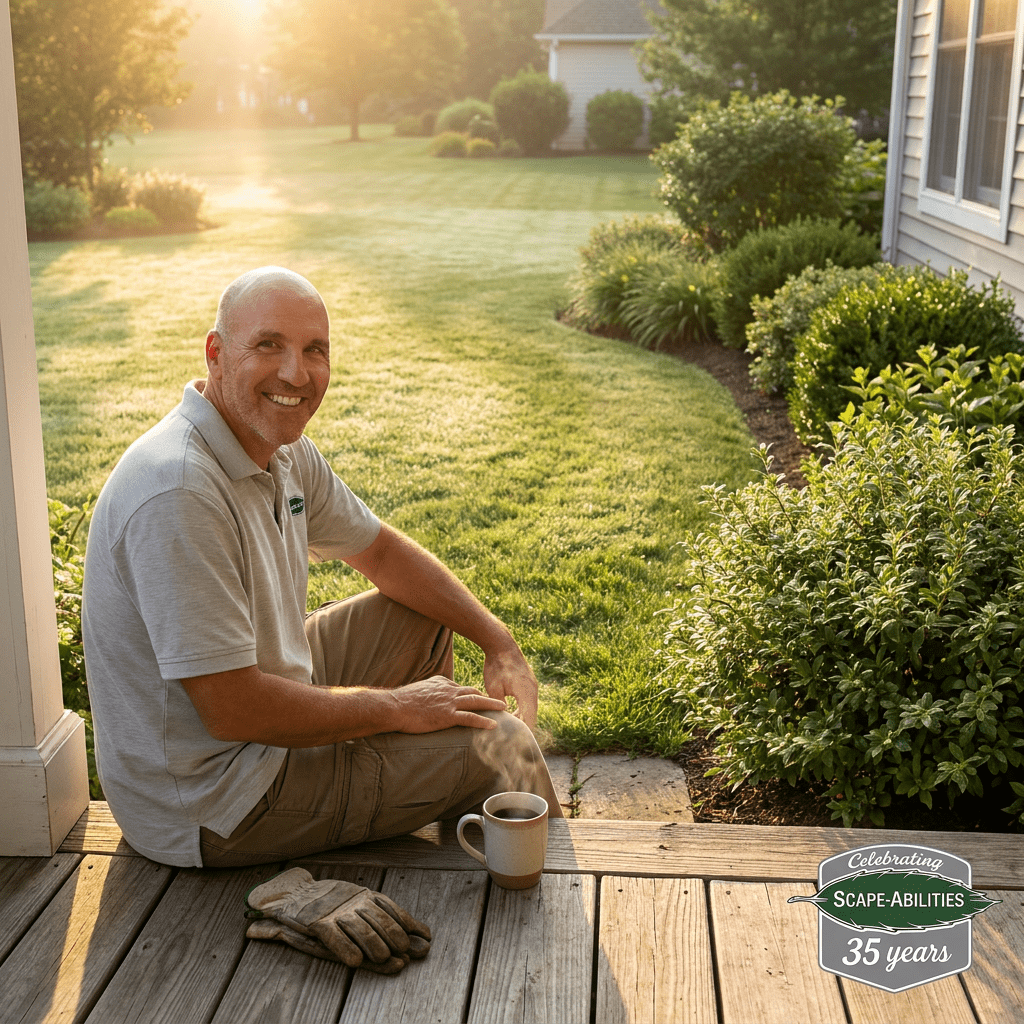
Field-based training on real properties
The on-property sessions are where the training gets its edge. Standing at an actual client’s foundation bed, the conversation covers things like: this shrub was pruned last month, here’s the growth response, here’s what to do differently on the next visit. This bed line is drifting outward and needs to be re-cut to a clean edge next week. This plant is showing early signs of a fungal issue that will be more visible in two weeks. Flag it. Treat it early.
Crews across multiple routes attend the same session together. Each crew then applies what they learned to their own properties on the following days. A pruning correction spotted on one property in Scotch Plains gets reinforced across every route in Westfield, Fanwood, Summit, Mountainside, Berkeley Heights, and Watchung by the end of the week.
Weed vines identified in the field become spots to watch for on every other property. Bed lines that need smoothing become a checklist item across the whole service area. Bloom timing on specific ornamentals gets calibrated to what’s actually happening in NJ that week, not what a textbook printed years ago says should be happening.
The connection to your property
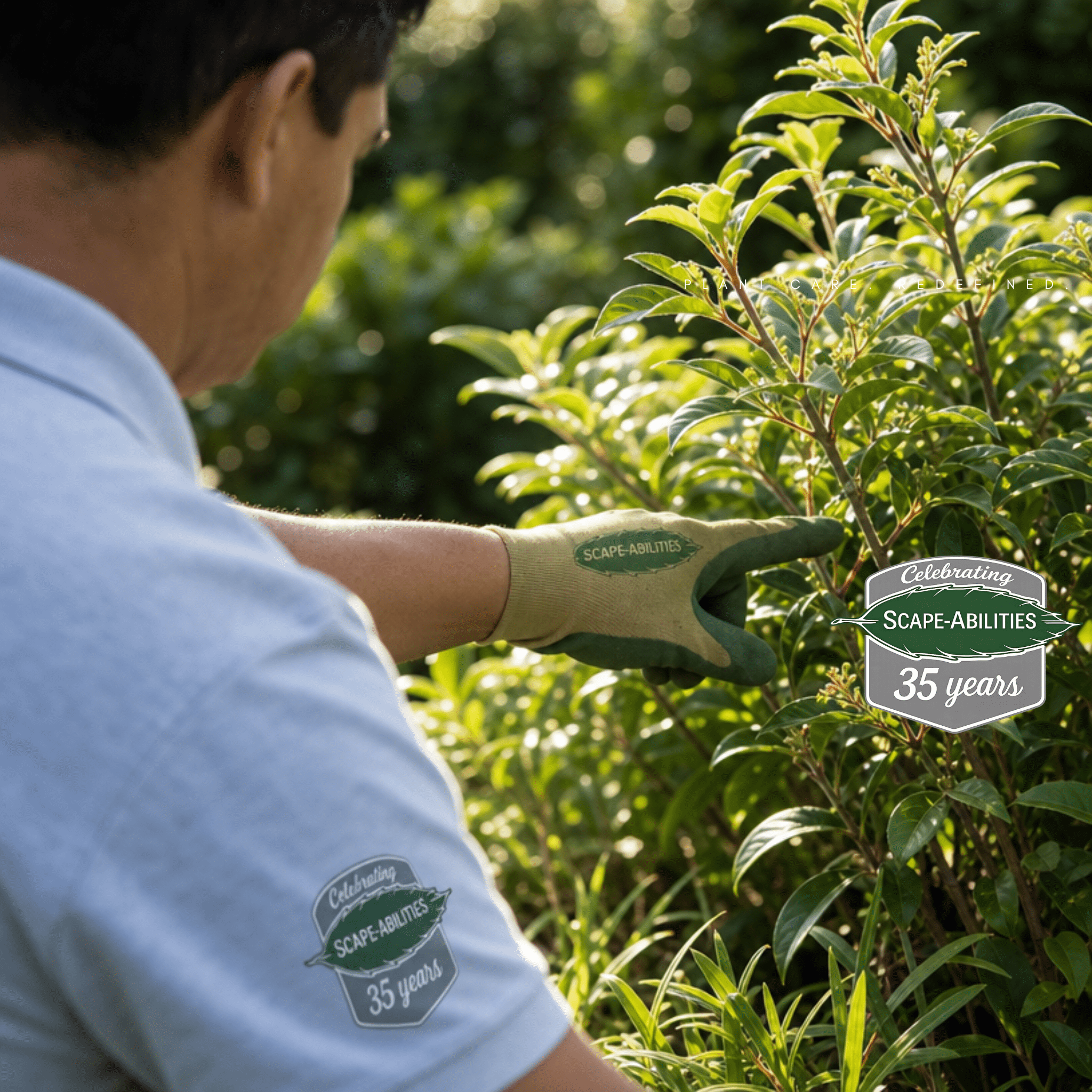 The reason a well-maintained NJ landscape looks the way it does over years, not just after a single visit, is training.
A landscape maintained by trained crews stays healthy. A landscape maintained by untrained crews slowly declines even when the mowing happens on schedule.
The invisible work isn’t the cutting. It’s what the crew notices while they’re on the property.
Well-trained crews notice:
- Boxwood showing early signs of leafminer damage before it’s visible from the front walk.
- Bed edges drifting and needing correction before the property looks unkempt.
- An irrigation head that’s off-target and watering the foundation instead of the lawn.
- A shrub pruned incorrectly two years ago that can still be corrected if caught now.
- Deer browse patterns changing on a specific street this month.
Untrained crews mow the lawn and leave.
Why this matters more than most people realize
Landscape maintenance is often assumed to be a commodity service. Someone with a mower shows up, cuts the grass, and leaves. The company hired doesn’t matter much, as long as the mowing happens.
That framing is wrong for one specific reason.
A residential landscape is a system with dozens of small conditions changing throughout the season. The company hired matters entirely, because whoever is on the property either sees those conditions changing or doesn’t. If they see them and know what to do, the property gets managed. If they don’t, the property slowly declines even when the visible work looks correct.
The Thursday tailgate is why the crews notice.
What this means for your property
 If you’re evaluating lawn and property services in the Scotch Plains, Westfield, or surrounding NJ areas, one question worth asking any provider: what does your team’s training look like week to week?
Most companies will answer that new hires get onboarded. Some will describe an annual safety refresher.
Scape-Abilities is one of the few whose answer is a scheduled weekly practice with named topics, field visits to real properties, and a culture that treats training as core to service delivery rather than as overhead.
The rest is the crews doing the work. Same neighborhoods, same standards, reinforced every Thursday morning before they show up.
For a property walk-through or to learn more about our maintenance programs, visit scape-abilities.com or call (908) 654-1155.
Frequently Asked Questions
What happens at Scape-Abilities’ Thursday morning training sessions?
Every Thursday morning before crews leave for their routes, Scape-Abilities holds a working training session. Some weeks it’s a tailgate discussion at the yard covering topics like grass cutting technique by turf species, pruning timing, irrigation systems, pest control, weed identification, or equipment safety. Other weeks it’s a field session at a specific client property, where crews from multiple routes review what’s working and what needs correction on real landscaping.
Why does ongoing crew training matter for a landscape’s health?
A residential or commercial landscape changes constantly throughout the season, with dozens of small conditions like bed edges drifting, early signs of pests, or misdirected irrigation. Trained crews notice these conditions early and act on them, while untrained crews mow and leave. Over time, that difference in awareness is what keeps a property healthy rather than slowly declining.
How does field-based training at one property benefit other properties?
When crews review an issue at one client property, such as a pruning correction or an emerging weed vine, that lesson carries across the whole service area. Crews apply what they observed to their own routes in the following days, so a fix identified in one town like Scotch Plains gets reinforced across neighborhoods including Westfield, Fanwood, Summit, Mountainside, Berkeley Heights, and Watchung that same week.
What should I ask a landscaping company about their training practices?
Ask what the team’s training looks like week to week, not just during onboarding. Most companies can only point to new-hire orientation or an annual safety refresher. A provider with a structured, recurring practice, like Scape-Abilities’ weekly tailgate and field sessions, is treating training as core to service quality rather than as a one-time formality.
Where does Scape-Abilities provide landscape maintenance services?
Scape-Abilities serves Scotch Plains, Westfield, and surrounding Northern Central New Jersey communities including Fanwood, Summit, Mountainside, Berkeley Heights, and Watchung, offering residential and commercial landscape design, build, and maintenance.